





How to Write a Thesis Paper – Step-by-Step Guide to Research Excellence
Writing a thesis paper is one of the most defining milestones in any academic journey. This thesis paper bridges the gap between theory and practice, where in a student transforms ideas into evidence-based research. To many, this process is not only quite challenging but also overwhelming, as every stage-from topic selection down to formatting-requires precision and patience. This is perhaps the reason universities worldwide show notably high rejection rates with respect to thesis papers.
Fortunately, our professional thesis writing services can make this process manageable by providing expert guidance on structure, methodology, and editing. In the following sections of the blog, you will learn what is thesis in research, why it is important, how to write one step by step, and how our expert help ensures academic success.
What is a Thesis in Research?
Everyone in their academic journey gets confused by the question of what is thesis in research at the beginning level. A research thesis is an extended form of scholarly writing which involves the presentation of original findings and arguments by a scholar based on his own systematic study. Unlike a research paper, a thesis represents the scholar's independent contribution to the field through detailed analysis, critical reasoning, and novelty.
A research thesis would usually focus on a particular question or hypothesis. It would require clarity of objectives, detailed methodology, and deep understanding of the existing literature. Because it is complex, it represents not only student academic capability but also intellectual maturity and research discipline.
Objectives and Importance of a Research Thesis
Showcase Your Research Abilities
The thesis reflects your ability to do a structured and logical investigation based on evidence. It represents an academic expression of how you think critically and solve problems.
Contribution to the Body of Knowledge
Any thesis extends current scholarship to include new insights, data, or perspectives that further push the boundaries of knowledge in your discipline.
Academic Recognition
Writing a well-researched thesis is respectable and credible in academia. In fact, it's mainly a requirement for higher learning degrees and academic accolades.
Skill Enhancement
A process like this reinforces writing, analysis, and project management skills-all qualities highly transferable to any job.
Manning Your Career
A well-researched thesis increases one's job prospects in research fellowships, publications, or teaching.
Importance of a Research Thesis
The research thesis represents an essential component in the development of any scholar in both academic and professional areas. It enhances the capabilities of analysis, reasoning, and writing; at the same time, it fosters independence in thought. Beyond academia, it is a testament to one's capability to apply the method of research to solving real-life problems.
Most journals decide to publish a paper based on the strength of its thesis foundation. A well-constructed thesis evidences novelty and methodological stringency, two major determinants of the acceptance rate. By implication, it may provide you with a backbone that will smoothly pave the way from a student to a researcher with publications.
How to Write a Thesis the Right Way
Writing a thesis, in essence, means understanding research excellence. It takes several interrelated steps to produce a coherent, high-quality academic manuscript. If one is not sure about refining the draft, the Scientific Manuscript Editing Service can polish your work for publication or submission.
Choice of Relevant Topic
Choose the topic that best suits your interest in research and academic goals. It should have a clearly defined problem it might solve, a research gap it may fill, or an extension of an existing theory.
Literature Review
Look at previous research undertaken to understand what was done, and where this study fits. A good literature review lays the foundation for your theoretical framework.
Formulate the Research Questions/Objectives
Frame clear, focused questions or objectives that will help you to outline your study. They should be almost like a map that leads to methodology and to the collection of data.
Design Methodology
Indicate whether the methods are quantitative, qualitative, or mixed. Here, you would have to justify your data collection and analysis strategy.
Data Collection
Data from authentic sources, collected ethically. Each step should ensure accuracy, validity, and transparency.
Data analysis
Interpret results using appropriate statistical or thematic tools. During this stage, information is transformed into meaningful insights.
Writing the Thesis Draft
Organise content logically. Present arguments in such a way that each section will prove your thesis or central argument.
Proofread before submission
Thorough proofreading clears grammatical errors, formatting inconsistencies, and citation mistakes, so students usually consult professional editors for refinement of language and structure before final submission.
Tools and Technology for Thesis Writing
Such modern tools can lighten your load in writing and increase your productivity. Reference managers like Zotero or Mendeley, writing interfaces like Scrivener or Google Docs, and data analysis software like SPSS, NVivo, or R Studio will ease the workflow. These tools will not only save your time but also make sure everything is kept consistent, accurate, and efficient along your thesis journey.
Common mistakes to avoid in writing a thesis
The majority of students do not know what it entails to compile a thesis paper that is publishable. Some present vague objectives, while others just forget to format or reference as expected. Poor organization, a lack of originality, and inability to interpret findings well are common reasons for rejection.
These mistakes have made the process appear daunting, but they are utterly avoidable with professional guidance. Our professional editors will correct inconsistencies and refine the structure in order to ensure your thesis meets all requirements for academia and publications.
Structure of a Standard Thesis Paper
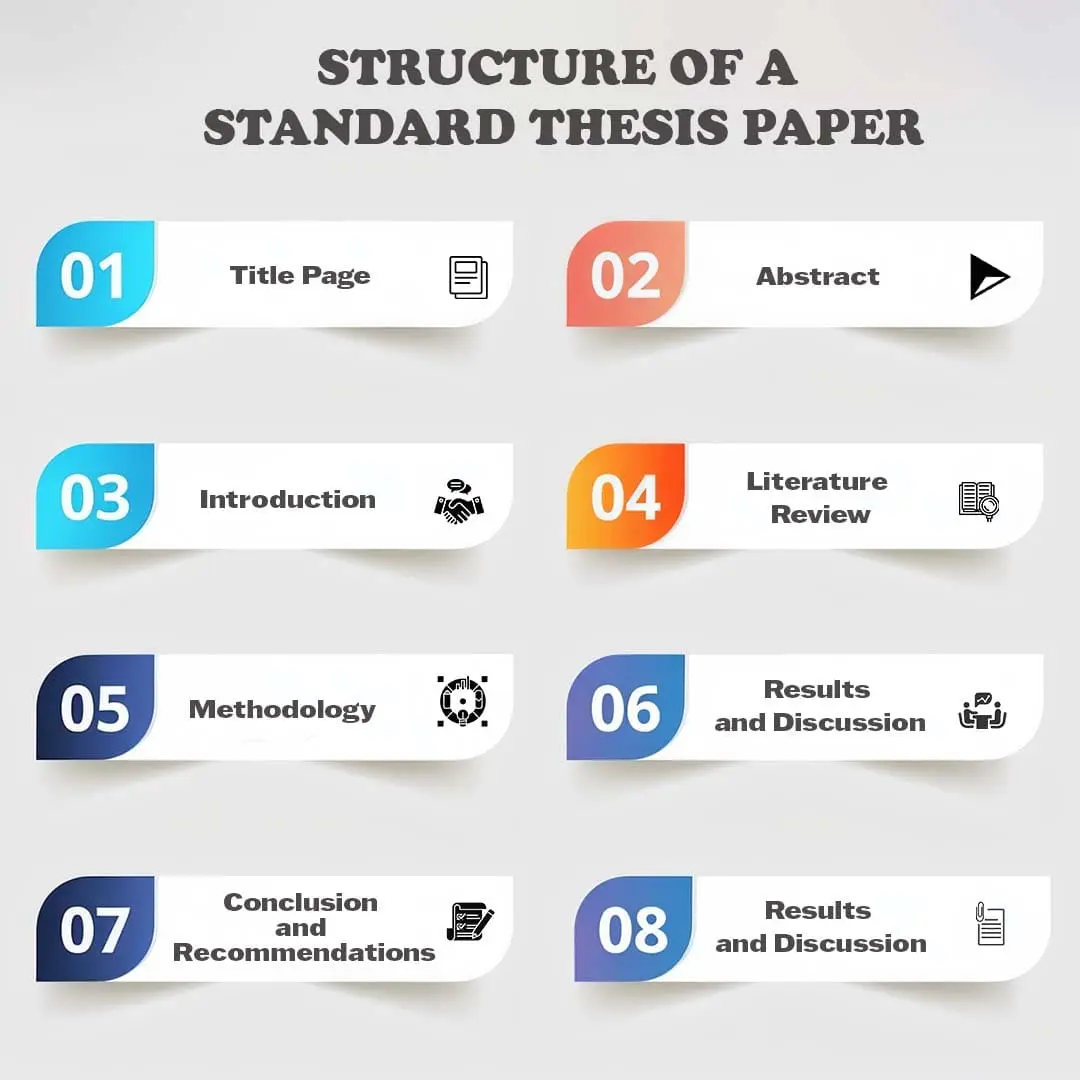
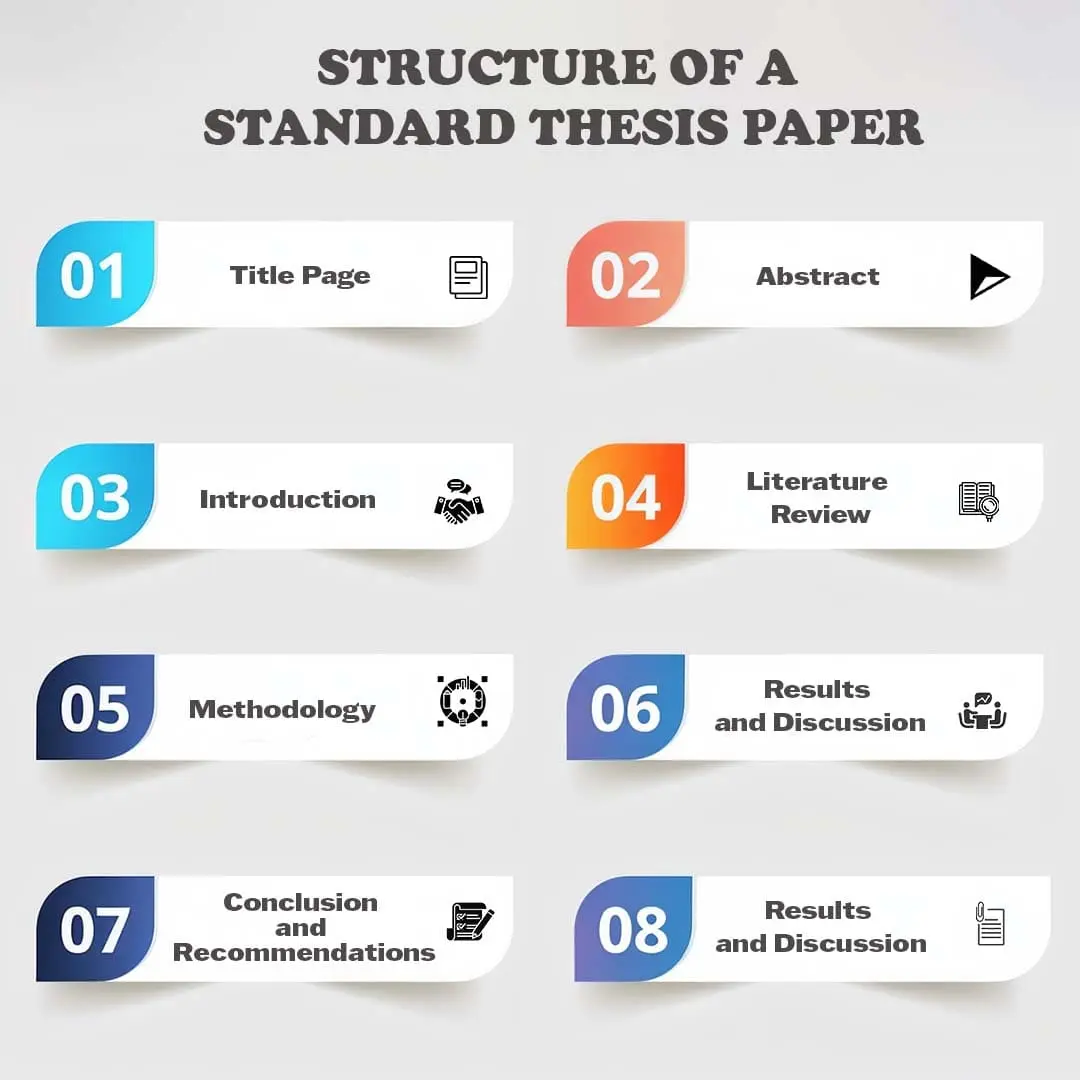
A good thesis paper should be well-structured, readable, and academically viable. Each part of it plays a special role in unfolding the research logically.
-
Title Page: This consists of the title, the name of the author, the institution, and date of submission.
-
Abstract: A summary of the research objectives, methodology, and results.
-
Introduction: Introduces the topic, the problem statement, and the research objectives.
-
Literature Review: A review of past research is done to ascertain where further knowledge is lacking.
-
Methodology: It describes the research design, data collection, and analysis methods.
-
Results and Discussion: Present findings along with their interpretation and relevance.
-
Conclusion and Recommendations: Summarises results, implications, and areas for future research.
-
References and Appendices: Attach references, questionnaires, or any other supporting material.
Role of Formatting and Presentation
Formatting creates the first impression of your thesis. It includes consistency in margin settings, font, citations, and headings combining to make professional readability of the paper possible. Most university and journal papers have strict guidelines on style, usually from APA, MLA, or Chicago. For scholars who find formatting a burden, professional editors help to ensure that it is fully compliant with particular guidelines, further enhancing the credibility of the paper.
Our Professional Thesis Writing Services – Expert Help for Research Success
The professional thesis writing services will make every stage in your research journey-from choosing the topic to the final proofreading-easier. Our expertise ensures that your work is well-written, academically sound, and free from plagiarism.
Key Services Include:
-
Topic and proposal development
-
Research design methodology
-
Data analysis and interpretation support
-
Editing, formatting, and proofreading
-
Plagiarism-free writing and compliance review
Benefits of our expert help:
-
Reduces stress and saves time.
-
Ensures error-free, publication-ready writing;
-
Enhances the chances of acceptance in journals or universities;
-
Provides individual feedback and technical advice
With our professional help, it turns what was a daunting task into a flawless academic deliverable, publication, or defence-ready.
Conclusion
Writing a thesis paper requires a commitment to effort that is critical in thought and structured properly. Knowing its purpose, developing one's writing process, and approaching timely expert support constitute the means to achieve academic excellence and research success.
Ready to make your thesis stand out? Get in touch with our professional editors or experts who write theses today and take your research to the next level.