





How to Choose a Dissertation Topic: An Academic Framework for Strategic Research Selection
Choosing a dissertation topic is the first critical step in doctoral research, yet many students underestimate its significance. Choosing the appropriate topic is the basis of any section of your research. An improperly selected topic may result in the rejection of the proposal, confusion in the methodological procedure, and also increase the time spent on the completion, complicating the whole process to an unwarranted extent. This guide explains academic,practical,and supervisory requirements you will use in choosing a topic that is rigorous, feasible, and impactful.
Dissertation topic selection goes beyond identifying an interesting connotation. It involves framing research in a way that makes your contribution to your field. All stages in your doctoral process, including a proposal and a viva defence, have to rely on a concise and precise scholarly topic.
What a Dissertation Topic Actually Represents in Doctoral Research
Doctoral research is founded on the topic of the dissertation, which offers a point of focus and orientation. It is necessary to explain the difference between other related notions:
-
Dissertation Topic: States the general field of investigation and shapes the study.
-
Research Problem: This determines the gap or challenge that the research responds to.
-
Research Title: Refers to the research in official academic books and journals.
These issues are also influenced by the subject matter of the research process:
-
Research Scope: Decides on what the study will cover and what it will not cover.
-
Methodology Feasibility: Determines which methods of research are viable and rigorous.
-
Data Accessibility: Ensures the necessary information or data sets are available.
Examiners often evaluate the topic before reading the full dissertation because it signals originality, relevance, and academic rigor. Even the acknowledgement in a research paper can reflect foundational guidance and prior work that supports the topic’s selection.
Academic Standards That Govern Dissertation Topic Selection
When evaluating how to choose a dissertation topic, universities rely on formal academic criteria to determine whether a proposed study meets doctoral-level expectations. Depending on these evaluation requirements, topic approval is executed:
-
Originality: Says if the subject introduces new ideas, points of view, or theoretical concepts instead of replicating the already existing study.
-
Scholarly Contribution: Examines how the subject matter can bring an addition to the academic discourse, contribute to the creation of theory, or advance practices in the area.
-
Feasibility: The issue is to find out whether the research can be completed within the agreed time limits, in accordance with the ethical standards and utilizes available academic resources.
-
Relevance Disciplinarily: Ensures that the topic is pertinent to the central theories of the field, the general research practices, and the school matters.
These are the criteria that would help the institution to decide on selecting a dissertation topic that is required by research and scholarly assessment that meets the requirements of a doctoral research paper.
Step-by-Step Academic Process for Choosing a Dissertation Topic
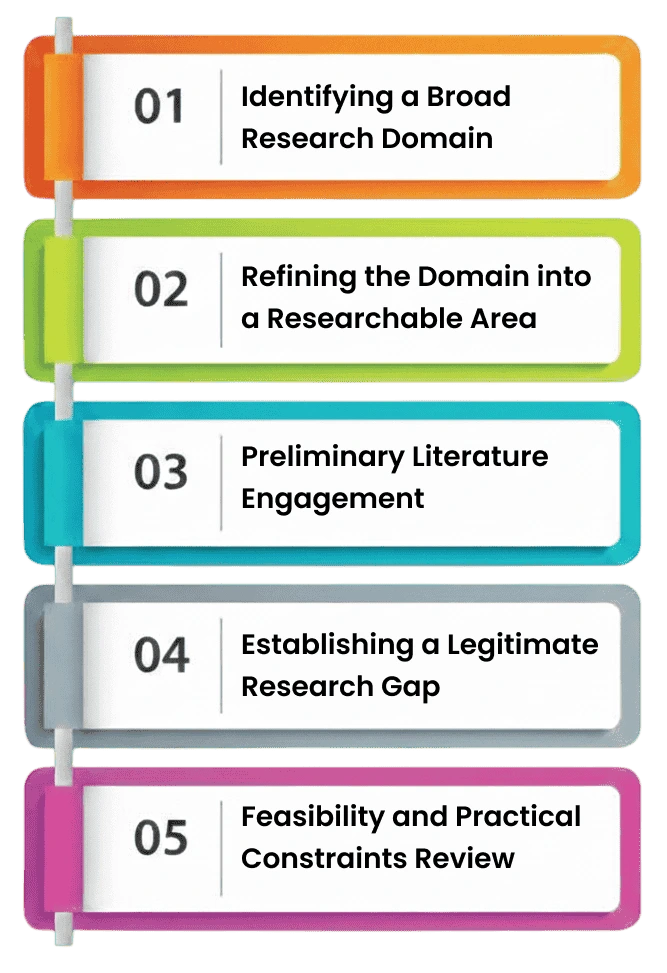
Understanding how to choose a dissertation topic involves recognizing that topic selection follows a structured academic process shaped by institutional standards and scholarly evaluation. It is not a one-concept decision, but a process of theoretical phases that refine a research concept into doctoral feasibility.
Identifying a Broad Research Domain
The first step is to identify the subject in a general field. This can assist you in interacting with already existing theories, issues, and research methodologies. You may be restricted in focus when you begin your research with a very specific topic, lose potential good theoretical foundation, and lose some academic flexibility.
Refining the Domain into a Researchable Area
Second, narrow the field to a specific, researchable scope. This conformity with the priorities of disciplinarity, scholarly discourse, continues to make the subject matter consistent, justifiable, and doctoral.
Preliminary Literature Engagement
The academic appropriateness of the topic is confirmed by the early literature review. It clears up prevailing themes, limits and unanswered questions. Rather than an exhaustive analysis, a review paper or any other source of synthesis can place your topic.
Establishing a Legitimate Research Gap
The gap in research refers to an evident deficiency, constraint, or unfulfilled concern in extant learning. Gaps are identified within the literature, rather than being based on superficial concepts
Feasibility and Practical Constraints Review
Evaluate practicability by looking at the time, availability of data and ethical necessities. These limitations will help conclude whether the topic is sustainable and viable for doctoral research.
Challenges Faced While Choosing a Dissertation Topic
Cognitively Demanding: The process of selecting a dissertation topic is cognitively intense, demanding that one integrate theoretical knowledge, methodological design and institutional/disciplinary prescriptions.
Uncertainty in Research Scope: Early conceptualizations tend to be poorly defined, so it is difficult to evaluate viability, significance and scholarly quality.
Rejection Cycles: It is common to have a number of rejection, review and revision processes regarding the proposal. Strict academic assessment does include feedback and is not a personal inability.
Evolving Academic Expectations: With the disciplinary norms, methodological standards, and supervisory directions frequently evolving, you have to keep evaluating and revisiting your topic in order to improve it.
Common Academic Errors in Dissertation Topic Selection
In the process of doctoral research, there are some shared mistakes that are normally encountered in the selection of a topic. Similarly, these trends manifest systemic issues and not mere accidents.
Overly Broad Topics: Too broad a topic might create overly general research questions and hard-to-control processes.
Excessively Narrow Topics: Too narrow a topic will limit theoretical influence and the proportion of information you may collect.
Superficial or Weakly Justified Gaps: The selection of gaps that are not well-founded in the literature results in an academically weak study.
Misalignment with Disciplinary Norms: Disciplinary norms are often misaligned with topics such as methodological rules, theoretical models, or even field expectations, which are likely to be criticized.
Ignoring Institutional Expectations: This approach can also result in no reply or continual review of the proposal through disregard of the institutional expectations regarding the feasibility, scope, or ethics.
Role of Supervisory Alignment in Topic Approval
Supervisors play a crucial role in determining the viability of dissertation topics, which is a key consideration when learning how to choose a dissertation topic effectively.
Expertise: Specialist supervisors aid in forming the subject and demonstrating the ways things can be.
Availability: Their frequent access to guidance and feedback maintains research ideas at the point.
Preferences: Methodological or thematic tastes of a supervisor may affect the very bodies that are passed and their further progression.
These factors affect approval dynamics but do not involve negotiation strategies. Ensuring supervisory alignment helps make the dissertation topic academically sound, feasible, and institutionally acceptable while supporting a strategic approach
Discipline-Specific Constraints in Dissertation Topic Selection
The topics of the dissertation should be up to the standards of every discipline, with the research being methodologically, theoretically, and academically sound.
-
Topic approval follows the unique standards and expectations of each discipline.
-
Disciplines set the bar for methodological rigor and theoretical relevance.
-
Approval ensures research aligns with established frameworks and scholarly norms.
-
Recognizing these boundaries helps in choosing a topic that is both credible and achievable.
Evaluating the Strength of a Dissertation Topic
Institutional protocols and scrutiny by an examiner are the primary measures of a dissertation topic's strength. Academic committees and universities seek originality, clarity and viability in the discipline. One of the points that examiners scrutinize is the theoretical background to ensure that the research works on the existing literature and provides substantial contributions.
It matters a lot that the methodology is rigorous. The subject needs to facilitate a viable, well-designed and reasonable research methodology. This evaluation makes reference to academic standards, and not to subjectivity. Institutions, by offering a sound framework of clarity and defensibility of a topic, guide students in how to choose a dissertation topic, bringing them toward research that is credible and achievable.
Why Dissertation Topic Selection Is Considered a Critical Research Milestone
Choosing the right dissertation topic is vital, influencing proposal approval, research efficiency, completion time, and the quality of viva outcomes.
-
Selecting an appropriate dissertation topic has long-term implications in all research processes.
-
Poor topic choices can negatively affect proposal approval, research progression, and viva performance.
-
Unclear, overly broad, or misaligned topics may extend completion times and complicate methodology.
-
Weakly defined topics reduce the overall academic impact and make defending the research more difficult.
-
A well-chosen subject enhances the proposal, offers specific orientation, and increases confidence when assessing the proposal.
-
Careful selection of topics guarantees that the work is ready on time, it has a sound methodology, and easier completion of the dissertation.
-
The subject matter identifies which direction of research is to follow influencing performance and ultimate academic achievement.
Professional Academic Support for Dissertation Topic Approval
Students often turn to our professional dissertation writing services for guidance, refining ideas, clarifying scope, and ensuring their topic meets academic standards.
-
Support is usually sought early in the research process, during topic exploration, proposal preparation, or when refining research objectives.
-
Professional assistance provides structured guidance, helping students clarify ideas, define scope, and ensure methodological feasibility.
-
The support is meant as guidance and refinement, not as a substitute for the student’s own work.
-
Engaging with dissertation writing services transforms uncertainty into confidence, enabling students to approach topic selection with clarity.
-
This assistance helps align topics with institutional expectations, increasing the likelihood of proposal approval and smooth research progression.
-
Professional guidance ensures that students maintain intellectual ownership while strengthening their dissertation’s credibility and feasibility.
Conclusion
Learning how to choose a dissertation topic is a thoughtful, ongoing process rather than a one-day decision. It is demanding with regard to thought, research and constant improvement. Having patience and having a clear plan in approaching topic selection will enable students to produce better proposals, have a run of research and being able to attain better results as they go through the viva. It is planned, and sometimes, professional consultation that enables the student to bring preliminary thoughts to fruition into effective, accomplishable research.